
When it comes to performance enhancement, fat loss, muscle recovery, and anti-aging, many athletes and enthusiasts face a common dilemma: HGH or peptides? Both options can increase growth hormone levels in the body, but they work in very different ways. This comprehensive guide breaks down the key differences between HGH and peptides, their benefits, drawbacks, costs, and helps you decide which option might be better for your goals.
What Is HGH?
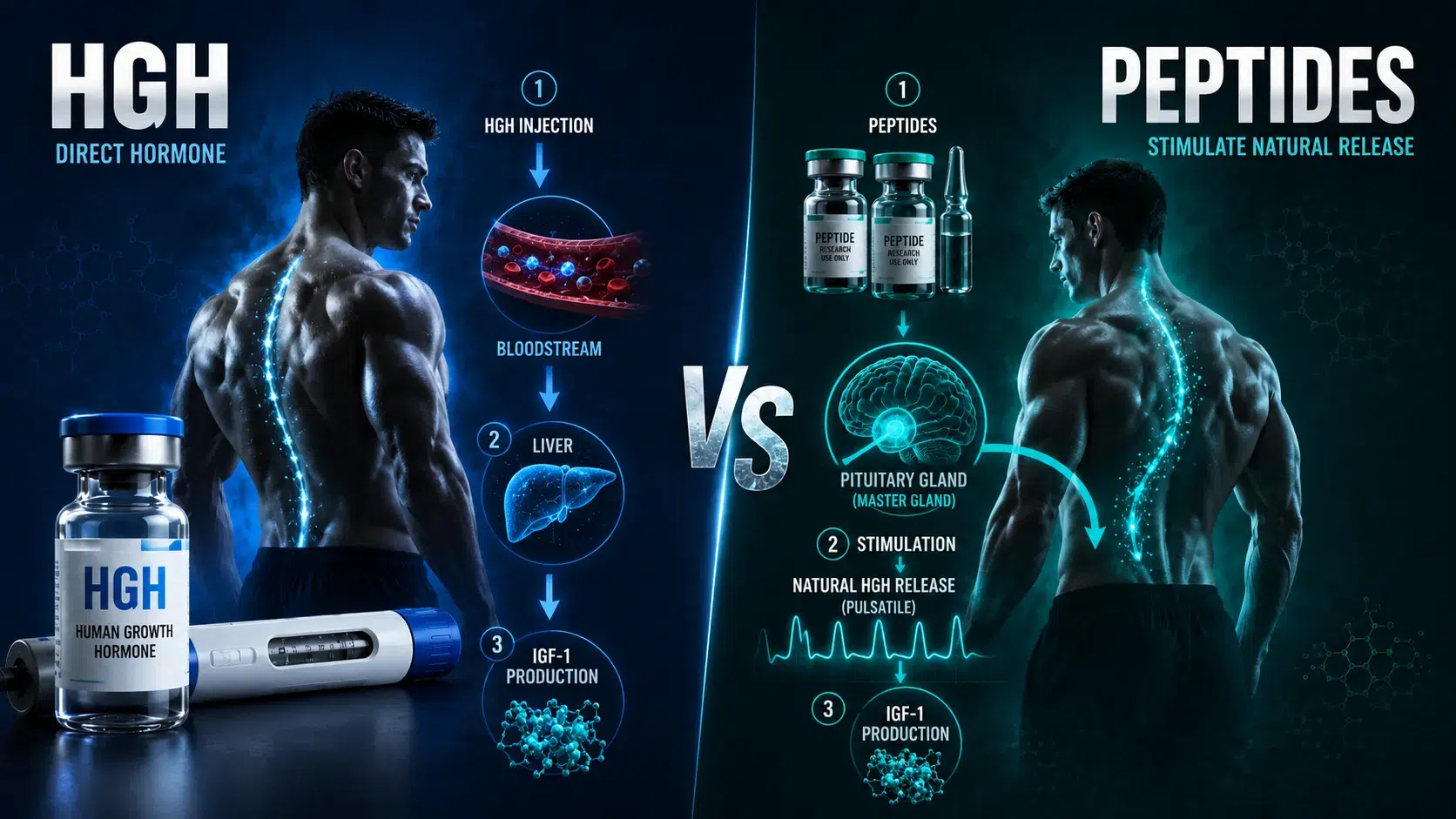
Human Growth Hormone (HGH), also known as somatropin, is a single large peptide hormone made of 191 amino acids. It is produced naturally by the pituitary gland and is now manufactured synthetically using recombinant DNA technology. When injected, real HGH directly enters the bloodstream and raises growth hormone levels immediately.
HGH is considered the gold standard for elevating growth hormone because it is identical to what the human body produces naturally. It stimulates the liver to produce Insulin-like Growth Factor-1 (IGF-1), which is responsible for most of its anabolic and fat-burning effects.
What Are Peptides?
Peptides are much smaller chains of amino acids that act as signaling molecules. In the context of performance enhancement, the most popular are Growth Hormone Releasing Peptides (GHRPs) and Growth Hormone Releasing Hormones (GHRHs). Common examples include Ipamorelin, CJC-1295, GHRP-2, GHRP-6, and Sermorelin.
Unlike direct HGH, these peptides do not provide exogenous growth hormone. Instead, they stimulate the pituitary gland to release more of the body’s own natural HGH. This makes them “secretagogues” — substances that trigger secretion.
Key Differences Between HGH and Peptides
The fundamental difference lies in their mechanism of action. HGH provides direct supplementation, while peptides encourage your body to produce more of its own hormone. This leads to significant differences in results, side effects, cost, and legality.
HGH or peptides — which one acts faster? Real HGH usually produces more noticeable and faster results in fat loss, recovery, and body composition because it delivers a consistent, high dose of the hormone. Peptides tend to produce milder, more gradual effects that feel more “natural.”
Benefits of HGH
- Stronger fat loss and improved body composition
- Faster recovery from intense training
- Better skin quality and anti-aging effects
- Significant increase in IGF-1 levels
- More predictable results due to direct dosing
However, HGH is more expensive and carries a higher risk of side effects when used in high doses (water retention, joint pain, insulin resistance).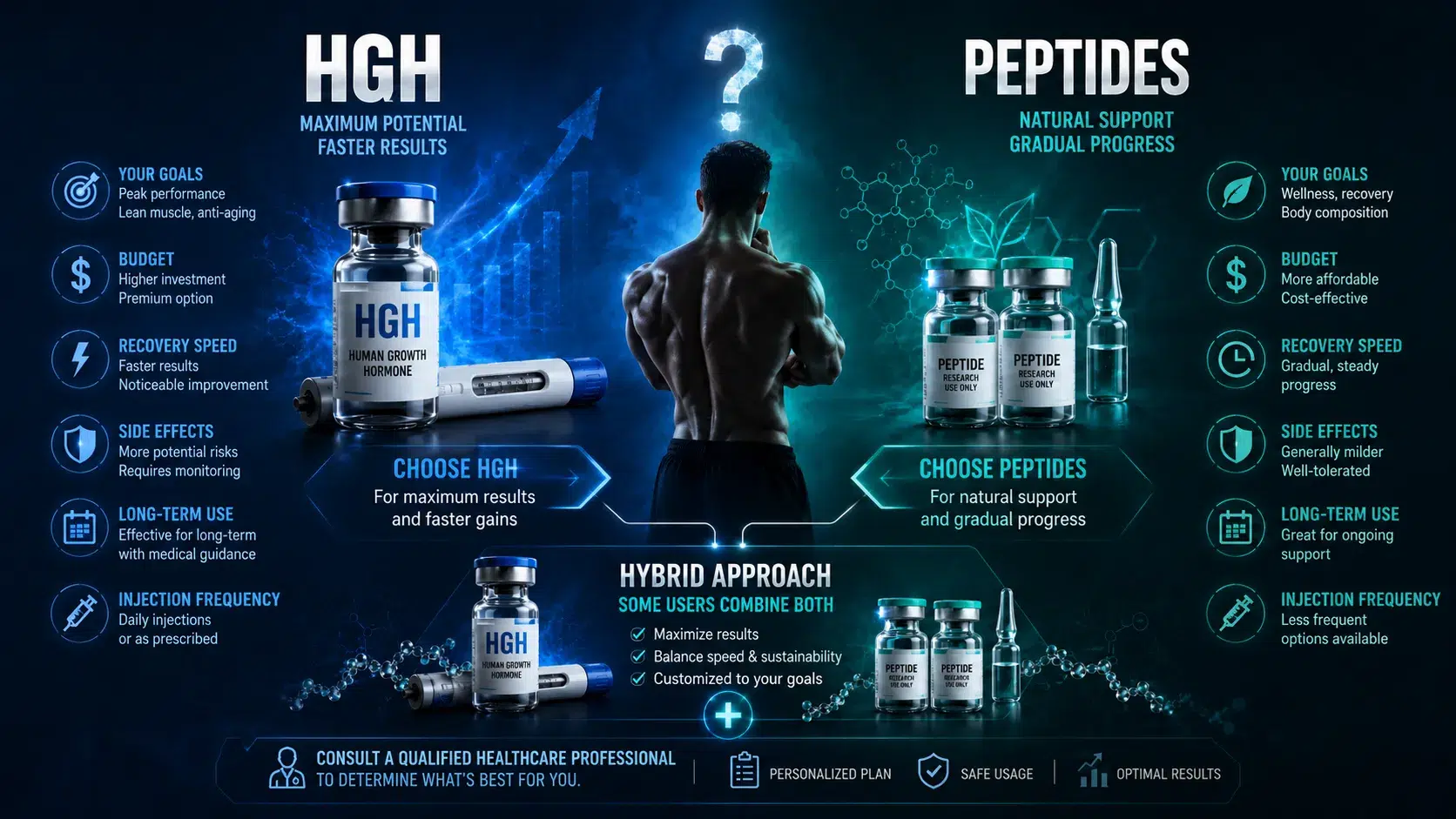
Benefits of Peptides
Much more affordable than real HGH, Lower risk of side effects and shutdown of natural production, Can be used for longer periods ,More flexible dosing protocols (often multiple injections per day), Better at mimicking natural pulsatile release of growth hormone
Many users choose peptides because they feel the results are “cleaner” and closer to the body’s natural processes.
HGH vs Peptides – Direct Comparison
| Aspect | HGH (Somatropin) | Peptides (GHRPs / GHRHs) |
| Mechanism | Direct hormone supplementation | Stimulates natural HGH release |
| Speed of Results | Fast and pronounced | Slower and more gradual |
| Cost per Month | $800 – $2000+ | $150 – $450 |
| Side Effect Risk | Higher at large doses | Generally lower |
| IGF-1 Increase | Very significant | Moderate |
| Injection Frequency | 1–2 times daily | 2–4 times daily |
| Legality & Quality | Strictly regulated | Varies widely |
Which Is Better: HGH or Peptides?
The answer to HGH or peptides depends entirely on your goals, budget, and risk tolerance.
Choose HGH if you:
Want maximum results in fat loss and recovery, Have a higher budget, Are preparing for a competition or photo shoot ,Need dramatic improvements in body composition
Choose Peptides if you:
Want a more affordable option ,Prefer a milder approach with lower side effect risk,Plan to use the compound for longer periods (6+ months), Are new to growth hormone therapy
Many advanced users combine both — using peptides as a base and adding real HGH for specific periods. This “peptides or HGH” hybrid approach is becoming increasingly popular.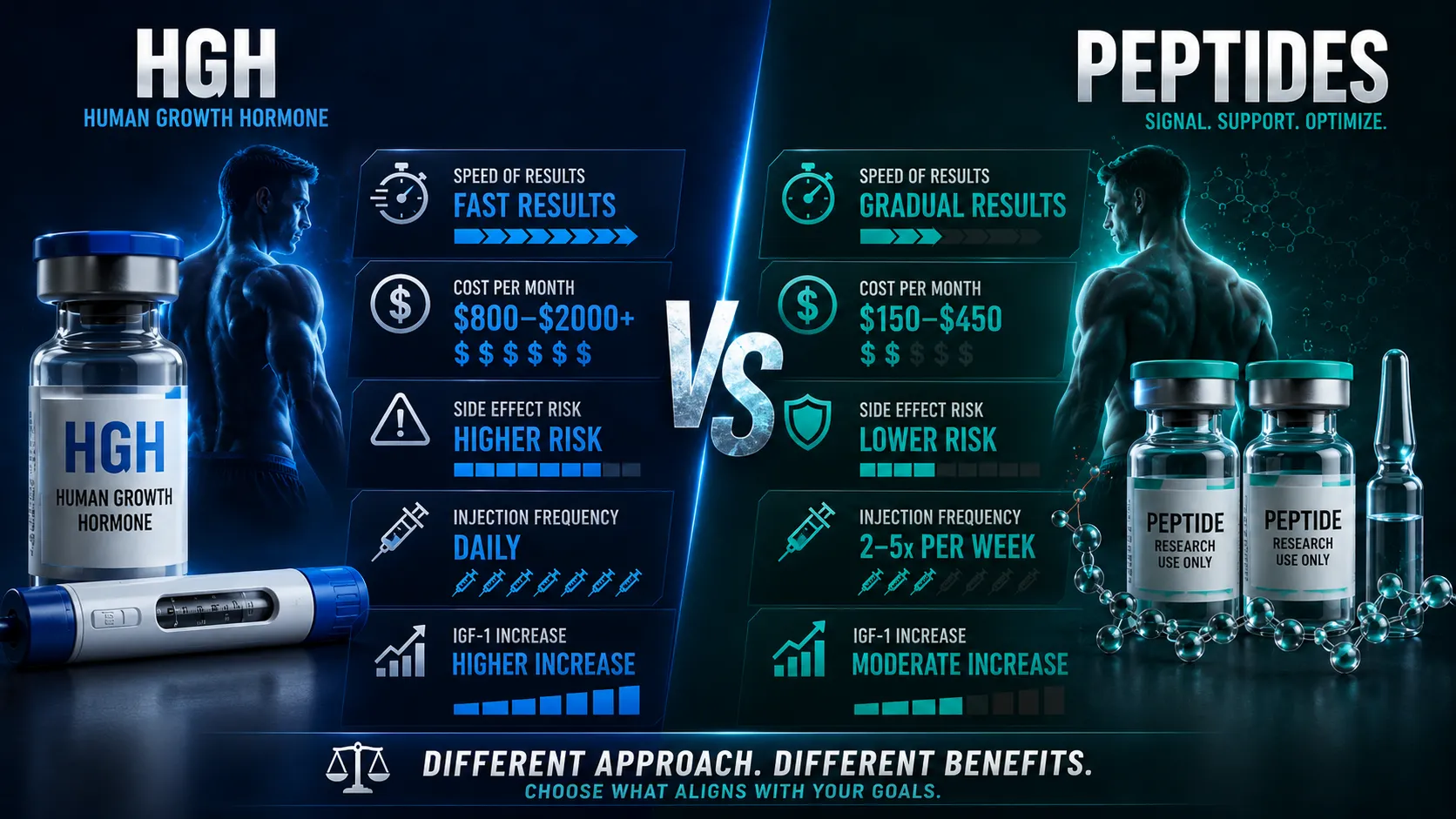
Cost Comparison: HGH vs Peptides
One of the biggest practical differences is price. Real pharmaceutical HGH is significantly more expensive due to its complex manufacturing process. High-quality peptides are much more budget-friendly, making them accessible to a wider audience.
For the average user running 4 IU of HGH daily, monthly costs can exceed $1000. In contrast, an effective peptide protocol (CJC-1295 + Ipamorelin) might cost only $200–350 per month. This large gap often influences the decision when choosing between HGH or peptides.
Advantages of Choosing Peptides
- Significantly lower cost
- Reduced risk of insulin resistance and water retention
- Easier to obtain from research chemical suppliers
- Can be stacked with other peptides for customized effects
- Better for long-term use without suppressing natural production
Side Effects and Safety Profile
HGH tends to cause more noticeable side effects at higher doses, including carpal tunnel syndrome, joint pain, bloating, and elevated blood sugar. Peptides generally have a milder profile, though some (like GHRP-2 and GHRP-6) can increase hunger significantly.
Because peptides work by stimulating your own pituitary gland, they are often considered safer for younger users or those concerned about long-term hormone suppression.
Side Effects Comparison
| Side Effect | HGH | Peptides |
| Water Retention | Common at high doses | Rare to mild |
| Increased Hunger | Minimal | Strong with some GHRPs |
| Insulin Sensitivity | Can decrease | Usually better preserved |
| Joint Pain / Carpal Tunnel | More frequent | Less common |
| Recovery Speed | Excellent | Good |
Practical Usage Protocols
HGH Protocol Example:
4–6 IU per day, injected in the morning and/or post-workout. Often used 5–7 days per week for 3–6 months.
Peptides Protocol Example:
CJC-1295 (with DAC) 2 mg per week + Ipamorelin 200–300 mcg 2–3 times daily. Many users inject before bed and after training.
The choice between peptides or HGH often comes down to lifestyle and injection tolerance. Peptides usually require more frequent injections, while HGH is more convenient.
Factors to Consider When Choosing Between HGH and Peptides
- Budget and monthly costs
- Desired speed and intensity of results
- Tolerance for injections and side effects
- Cycle length and long-term plans
- Access to quality products and blood work monitoring

Stacking HGH and Peptides
Many experienced users do not choose strictly HGH or peptides — they use both together. Peptides can amplify the body’s response to exogenous HGH, potentially allowing lower HGH doses and better overall results. This combined approach is popular among advanced bodybuilders and those seeking optimized anti-aging protocols.
There is no universal winner in the debate of HGH or peptides. Real HGH delivers stronger, faster, and more dramatic results but at a much higher cost and with greater potential side effects. Peptides offer a more affordable, milder, and often safer alternative that works well for most users, especially over longer periods.
Your decision should be based on your specific goals, financial situation, experience level, and willingness to manage potential side effects. Many athletes start with peptides to assess their response before moving to real HGH. Others use peptides as a cost-effective way to extend or enhance their HGH cycles.