

The half life of HGH is an important concept for understanding how human growth hormone behaves after it is naturally released or introduced into the body. It explains how quickly HGH levels begin to decrease and why timing, absorption, metabolism, and duration of action can differ from person to person. For people researching HGH injection timing, recovery, performance, or hormone therapy, knowing the half life of HGH helps separate realistic expectations from exaggerated claims. However, HGH should always be discussed carefully because it is a powerful hormone that affects metabolism, tissue repair, and several body systems.
What Is HGH
HGH, or human growth hormone, is a peptide hormone produced by the pituitary gland. It plays a major role in growth during childhood and continues to support important functions in adults, including tissue repair, metabolism, body composition, and cellular regeneration. Human growth hormone also helps regulate how the body uses fats, carbohydrates, and proteins, which is why it is often discussed in medical, fitness, and anti-aging contexts.
HGH does not work as a simple energy booster or basic supplement. It interacts with receptors in the body and stimulates several biological pathways. One of the most important pathways involves IGF-1, or insulin-like growth factor 1, which is produced mainly in the liver in response to HGH. This connection helps explain many growth hormone effects related to recovery, tissue maintenance, and metabolic activity.
Because HGH affects more than one system, its use requires caution. Synthetic HGH may be prescribed for specific medical conditions, but using it without medical supervision can increase the risk of side effects. Understanding HGH metabolism, duration, and half life is useful, but it should not replace professional medical advice.
Natural HGH Production
Natural HGH production happens in pulses throughout the day instead of staying at one constant level. The largest release often occurs during deep sleep, which is why sleep quality is strongly connected with hormone balance and recovery. Exercise, fasting, stress, and blood sugar changes can also influence natural HGH release. As people age, natural production may gradually decline, which can affect recovery, body composition, and energy levels.
Synthetic HGH Forms
Synthetic HGH is a manufactured form of human growth hormone designed to act similarly to the hormone naturally produced by the body. It is commonly known as somatropin and may be prescribed for diagnosed growth hormone deficiency or other approved medical conditions. Synthetic HGH forms are usually administered by injection, but the exact approach should always depend on a doctor’s prescription, health status, and monitoring plan.

What Does HGH Half Life Mean
The HGH half life refers to the amount of time it takes for the level of active human growth hormone in the body to decrease by half. This does not mean that HGH completely disappears after one half-life period. Instead, the body gradually absorbs, uses, breaks down, and clears the hormone over time. Understanding this process helps explain why HGH may have a relatively short measurable presence in the bloodstream while some related biological effects can last longer.
When people ask about the half life of HGH, they often want to know how long HGH works, how long it stays in the body, or how long its effects may be noticeable. These are related questions, but they are not exactly the same. The direct hormone may be processed relatively quickly, while downstream effects connected with IGF-1, tissue repair, and metabolism may continue after HGH levels start to decline.
This is why HGH pharmacokinetics can be confusing. A hormone can have a short direct half life but still influence the body through longer biological pathways. Factors such as dosage, injection method, individual metabolism, age, liver function, and overall health can also change how HGH behaves. For this reason, half life should be understood as one part of the bigger picture, not as the only factor that determines growth hormone duration.
Biological Vs Active Half Life
Biological half life describes how long the body takes to reduce HGH levels by half through metabolism and clearance. Active half life focuses more on how long the hormone-related effects may continue. These two ideas can overlap, but they are not identical. HGH itself may decline relatively quickly, while growth hormone effects connected with IGF-1, recovery, and metabolism may continue beyond the direct hormone spike.
How Long HGH Stays In The Body
How long HGH stays in the body depends on what exactly is being measured. The direct presence of human growth hormone in the bloodstream is not the same as the full duration of its biological effects. HGH can be absorbed, used, and cleared relatively quickly, but its influence may continue through related pathways, especially IGF-1 activity. This is why the answer to “how long does HGH stay in your system” is more complex than a single number.
After natural release or synthetic HGH administration, growth hormone enters circulation and begins interacting with receptors. The body then starts processing and clearing the hormone, while related signals may continue affecting tissue repair, metabolism, and recovery. This means HGH duration of action may feel longer than the direct half life of HGH itself.
Another important point is that HGH does not behave like a constant, stable hormone in the bloodstream. Natural HGH is released in pulses, especially during sleep, and synthetic HGH may also create a temporary rise after absorption. Because of this, levels can change throughout the day, and a single measurement may not fully explain the body’s overall response.
Several factors can affect how long HGH remains relevant in the body, including age, health status, liver function, kidney function, metabolic rate, dosage, and injection method. Sleep, training load, nutrition, and recovery habits may also influence how the body responds to growth hormone. For this reason, HGH metabolism should always be considered individually rather than treated as the same for every person.
| Question | What It Really Means |
|---|---|
| How long does HGH stay in the body? | How long the hormone can be present, processed, or biologically relevant |
| How long does HGH work? | How long growth hormone effects may continue after release or administration |
| How long is HGH detectable? | How long testing methods may identify HGH or related biomarkers |
Detection Time In Blood And Urine
Detection time in blood and urine is different from the general half life of HGH. Blood testing may show changes in growth hormone levels, but HGH is naturally released in pulses, so results can vary depending on timing. A blood sample taken at one moment may not reflect the full pattern of natural production or synthetic HGH activity. This is why growth hormone testing often requires medical interpretation rather than simple self-analysis.
Urine testing is also more complex because HGH is a peptide hormone and does not behave like many drugs that are easily detected through standard urine screening. Some forms of testing may look at HGH directly, while others may evaluate related biological markers. The detection window can depend on the method used, the sensitivity of the test, the timing of administration, and the person’s metabolism.
For athletes, detection can also be relevant because HGH is restricted in many competitive sports. However, detection time should not be confused with safety or effectiveness. A hormone may become harder to measure directly while the body is still experiencing related effects. This is why anyone using synthetic HGH should rely on medical monitoring and not assume that timing alone can predict how the body is responding.
Factors That Affect HGH Half Life
Several factors can affect HGH half life, absorption, clearance, and duration of action. Even if two people use the same synthetic HGH form, their bodies may not process it in exactly the same way. Growth hormone response can vary because of metabolism, body composition, organ function, age, health conditions, and lifestyle habits.
One of the main factors is individual metabolism. People with different metabolic rates may absorb and clear hormones at different speeds. Liver function is especially important because the liver plays a key role in producing IGF-1 in response to HGH. Since IGF-1 is connected with many growth hormone effects, liver health and metabolic status can influence how HGH works after it enters the body.
Age can also affect growth hormone activity. Natural HGH production often declines over time, and older adults may have different baseline hormone levels compared with younger people. This does not mean synthetic HGH is automatically appropriate for anti-aging or fitness purposes, but it does help explain why hormone response can vary by age and health status.
Body composition may also play a role. Differences in lean mass, body fat, insulin sensitivity, and overall metabolic health can influence how the body responds to HGH. A person with strong insulin sensitivity and stable metabolic markers may respond differently from someone with blood sugar issues or poor recovery habits.
Lifestyle factors are also important. Sleep quality, training intensity, calorie intake, protein intake, stress, and recovery all shape how the body handles growth hormone activity. Poor sleep can interfere with natural HGH rhythm, while overtraining and inadequate nutrition may limit recovery even if HGH levels are higher.
| Factor | Possible Influence On HGH Response |
|---|---|
| Age and hormone status | Can affect natural HGH production and baseline recovery capacity |
| Metabolism and organ function | May influence HGH clearance, IGF-1 activity, and duration of effects |
| Sleep, training, and nutrition | Can change recovery quality and perceived growth hormone effects |
Dosage And Injection Method
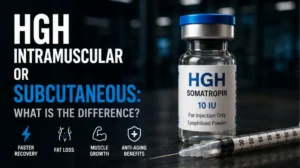
Dosage and injection method can influence HGH absorption time, peak levels, and overall response. However, these details should always be managed by a healthcare professional. Human growth hormone is a prescription medication, not a casual supplement, and changing dosage without medical guidance can increase the risk of side effects.
Higher exposure does not automatically mean better results. In some cases, more aggressive use may increase the chance of water retention, joint discomfort, numbness, swelling, or changes in blood sugar control. This is why the safest approach is based on medical testing, prescription instructions, and regular monitoring rather than copying another person’s HGH schedule.
The method of administration may also affect how synthetic HGH enters circulation and how quickly it becomes biologically active. Still, injection technique, timing, and dose adjustments should not be treated as trial-and-error decisions. They should follow medical instructions and be evaluated according to health markers, symptoms, and treatment goals.

For people researching HGH injection timing, it is important to understand that timing alone does not guarantee better results. The body’s response depends on the full context: dosage, formulation, health status, metabolism, sleep, nutrition, and training routine. A responsible approach focuses on safety and consistency rather than chasing the strongest or fastest effect.
Benefits And Risks Of HGH Use
The benefits and risks of HGH use should be considered together because human growth hormone can influence several systems in the body. In a medical setting, synthetic HGH may help people with diagnosed growth hormone deficiency or other approved conditions. It may support growth, tissue maintenance, metabolism, body composition, and recovery when used correctly under professional supervision. However, these potential benefits do not mean HGH is safe or appropriate for everyone.
Some people are interested in HGH for sale because of its possible connection with recovery, fat metabolism, lean body mass, and energy levels. Since growth hormone plays a role in tissue repair and metabolic regulation, it is often discussed in fitness, bodybuilding, and anti-aging communities. However, many claims about HGH are exaggerated. The half life of HGH can help explain how the hormone behaves in the body, but it does not prove that higher levels will automatically lead to better performance, faster muscle gain, or safer results.
The risks of HGH use can become more serious when it is used without medical supervision. Possible side effects may include water retention, swelling, joint discomfort, numbness, tingling, muscle pain, headaches, and changes in blood sugar control. In some people, HGH may also worsen insulin resistance or create additional strain on metabolic health. This is especially important for anyone with diabetes risk, cardiovascular concerns, or existing hormone-related conditions.
Another risk is misunderstanding short-term changes. Some people may mistake fluid retention or temporary fullness for real improvements in muscle mass or body composition. This can lead to unrealistic expectations and unsafe decisions. HGH duration of action and related effects may vary, but visible changes do not always mean the body is adapting in a healthy way.
| Potential Benefit | Possible Risk |
|---|---|
| May support tissue repair and recovery in medical contexts | May cause swelling, joint discomfort, or water retention |
| May influence body composition and metabolism | May affect blood sugar control and insulin sensitivity |
| May help with diagnosed growth hormone deficiency | Unsafe use may increase long-term health risks |
For this reason, HGH should not be approached as a simple enhancement tool. Even when people understand HGH metabolism, half life, and injection timing, they still need medical guidance to evaluate safety. The most responsible approach is to focus on diagnosis, monitoring, realistic expectations, and long-term health rather than short-term physical changes.

Safe HGH Administration
Safe HGH administration starts with medical supervision. Human growth hormone should only be used when there is a clear medical reason, proper testing, and a prescription from a qualified healthcare provider. Before HGH is used, a doctor may evaluate hormone levels, IGF-1, blood sugar markers, thyroid function, medical history, and other health indicators. This helps determine whether synthetic HGH is appropriate and whether the benefits outweigh the risks.
A safe approach also includes regular monitoring. Because HGH can affect blood sugar, fluid balance, joints, nerves, and metabolism, users should not rely only on how they feel. Symptoms such as swelling, numbness, tingling, joint pain, unusual fatigue, or changes in glucose control should be discussed with a healthcare provider. Medical follow-up helps identify possible problems early and allows treatment to be adjusted safely.
HGH injection timing, dosage, and method should follow prescription instructions rather than advice from online forums, gym partners, or social media. The half life of HGH may help explain why timing matters, but it should not be used as a reason to experiment with dosing. Individual response can vary, and even small changes may affect side effects or treatment outcomes.
Safe administration also means supporting the body with healthy habits. Sleep, nutrition, training balance, hydration, and recovery can all influence hormone response. HGH is not a replacement for these foundations. Poor sleep, overtraining, low protein intake, or uncontrolled stress can limit benefits and increase the chance of negative effects.
A responsible HGH plan should include:
- medical testing before and during use;
- clear prescription instructions from a healthcare provider;
- monitoring for side effects, blood sugar changes, and recovery response.
In the end, understanding the half life of HGH is useful because it explains how growth hormone is processed and why timing, metabolism, and duration of action matter. But half life is only one part of the full picture. Safe HGH use depends on professional guidance, proper monitoring, and realistic expectations about what human growth hormone can and cannot do.